
A detective logic puzzle gives mystery storytelling a provable answer. You do not win by spotting a hidden object or choosing the most suspicious character; you combine evidence until only one arrangement can be true.
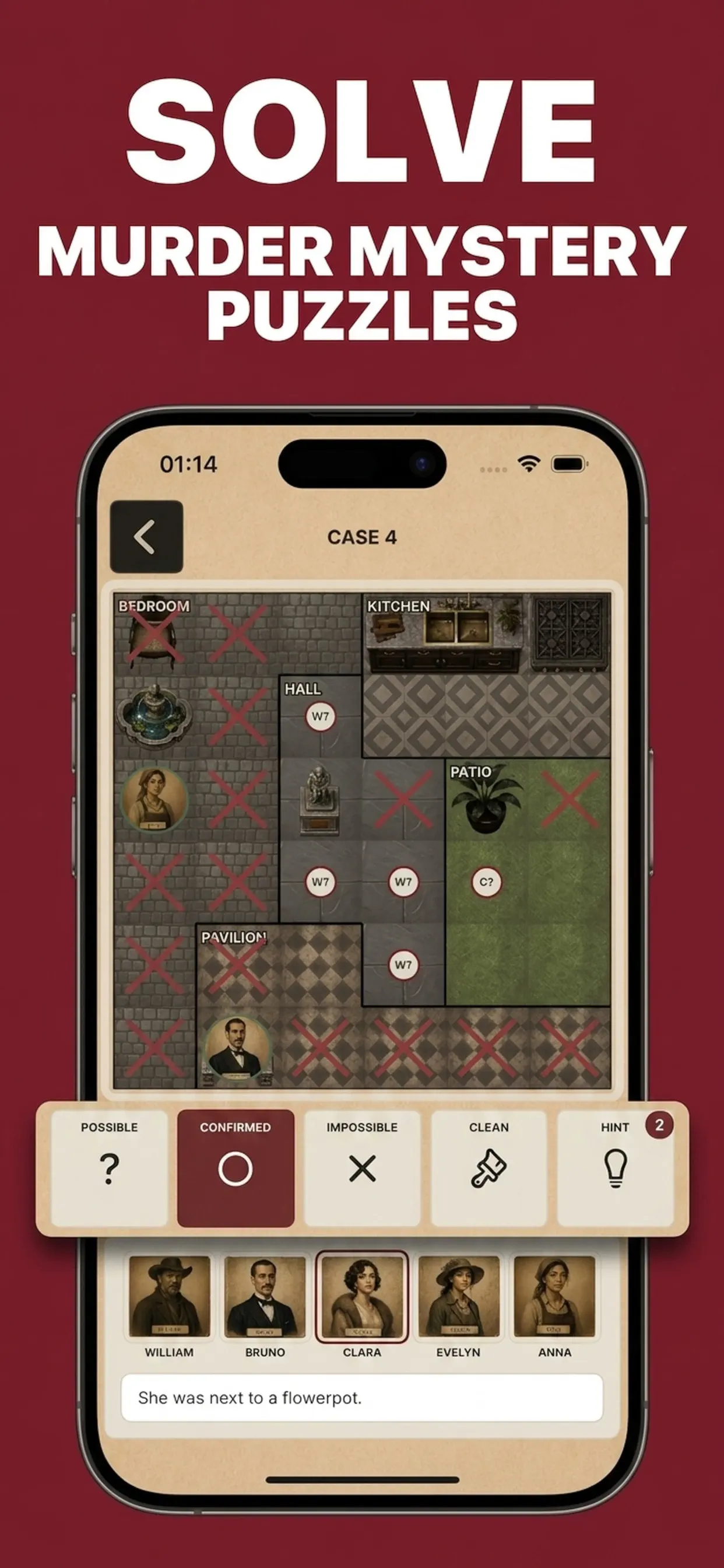
Mystery Grid packages that reasoning into short, illustrated cases with suspects, rooms, furniture, and a final culprit reveal.
The mystery supplies motivation
Suspects and crime scenes make abstract constraints easier to remember. A clue about a kitchen, fountain, or first column creates a visual relationship rather than a line in a generic table.
The atmosphere adds stakes, but the story never replaces logic. Every case remains a structured puzzle with a unique answer.
The grid supplies fairness
The one-per-row and one-per-column rule prevents arbitrary placements. Each confirmed suspect changes the possibilities for the entire board.
Because the constraints are visible, players can explain why an answer is correct. That is the core appeal for people who enjoy Sudoku, logic grids, and deduction games.
Clues create the solve path
Direct clues start the board; relative and room-based clues create deeper chains. Difficulty grows by making the interactions less immediate, not by making the outcome random.
Smart hints can keep a case moving, but the ideal hint reveals where to look rather than simply naming the culprit.
Try a case in Mystery Grid
Case Zero teaches the interaction before the manor cases increase in complexity. Mark cells as possible, confirmed, or impossible while you test each clue against the grid.
The hand-drawn case-file presentation keeps the tone intriguing without blood or gore, making the game suitable for puzzle players who prefer cozy mystery over horror.
Put the guide into practice
Try it in Mystery Grid
Mystery Grid turns murder mysteries into fair, bite-sized logic puzzles. Read the clues, place each suspect, and reveal the culprit—no guessing, no gore, just deduction.

Common questions
FAQ
Is this like a hidden-object game?+
No. Mystery Grid centers on logical placement and clue deduction rather than searching a scene for concealed objects.
Is it suitable for Sudoku fans?+
Yes. The row-and-column constraint feels familiar, while suspects and clues replace number entry.